Wood Species and Montana’s Climate
Montana’s dry winters change the calculus on wood selection. When forced-air heating and wood stoves drop indoor humidity into the 20% range, wood contracts — and a species that performs beautifully in a humid climate can gap, crack, or cup here.
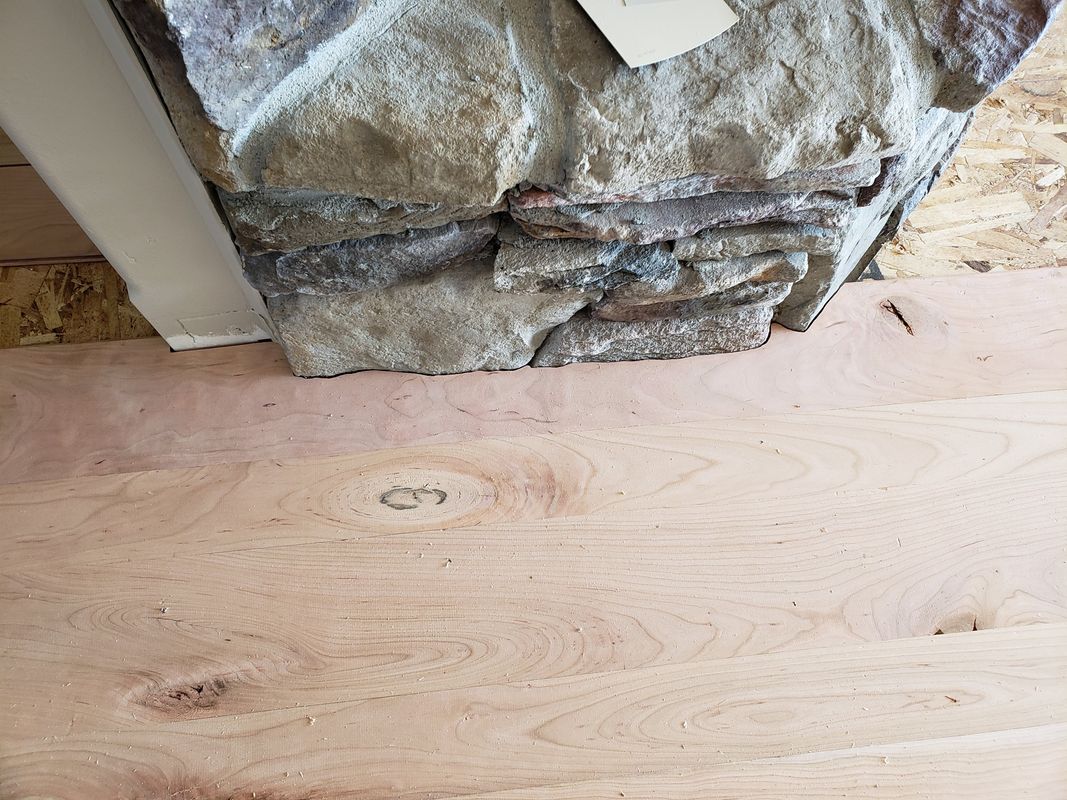
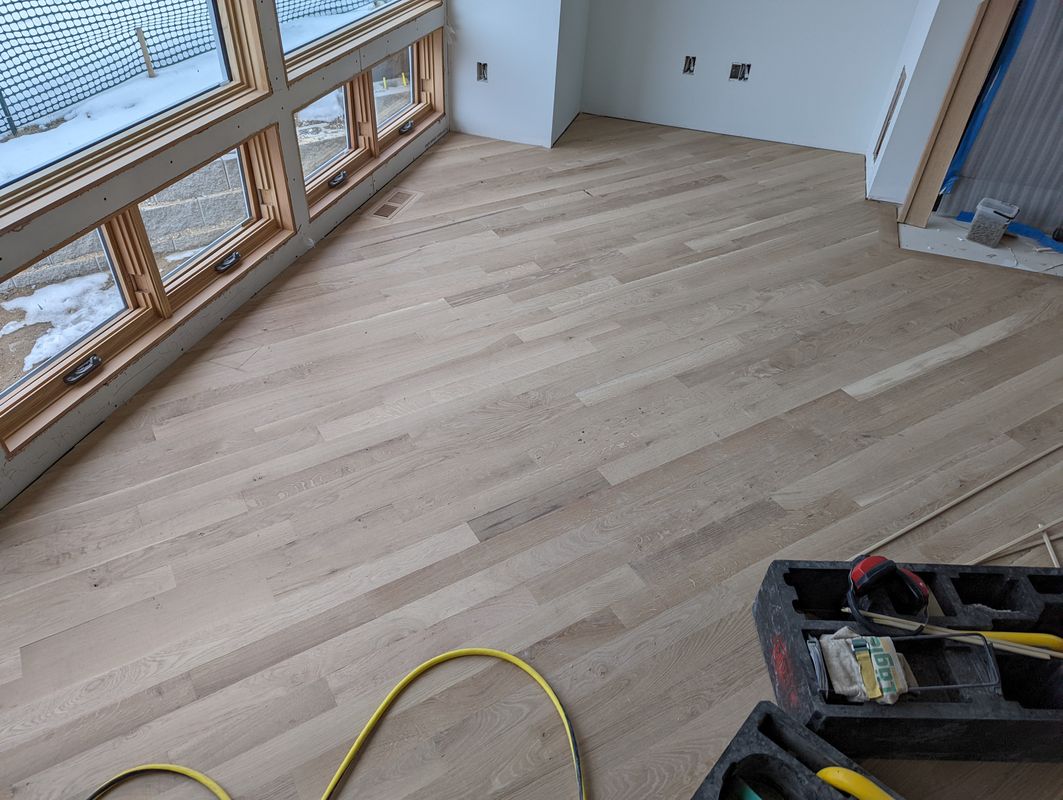
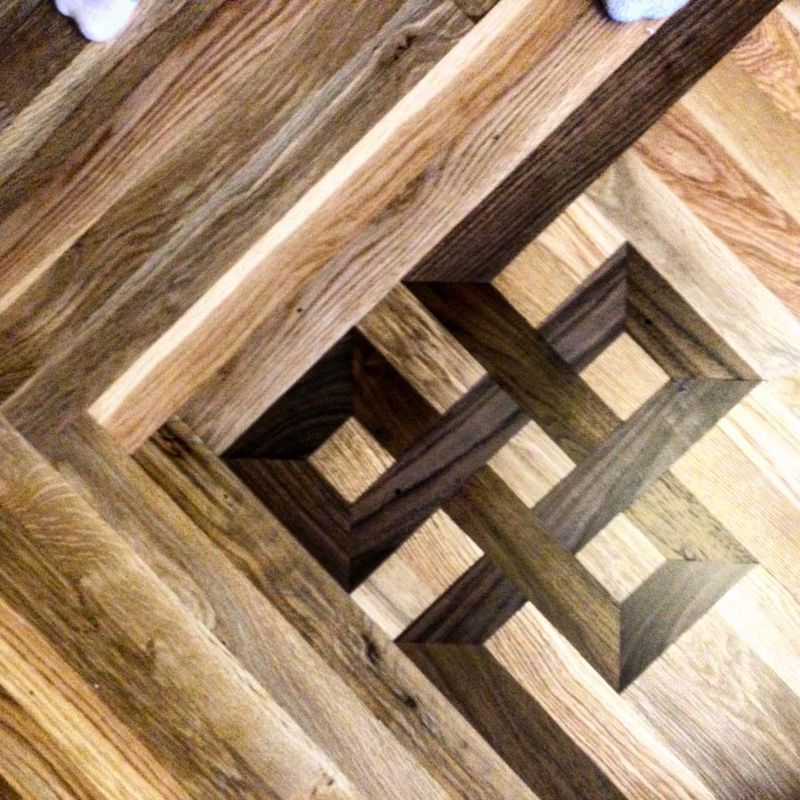
White oak and hickory are the species we recommend most often for western Montana homes. Both are dense, dimensionally stable, and handle seasonal movement without the drama you can see in softer or more porous species. For homeowners drawn to a lighter aesthetic — particularly in Big Sky chalets and modern Bozeman builds — European white oak offers a clean, open grain that takes a wide range of stains and water-based finishes exceptionally well.
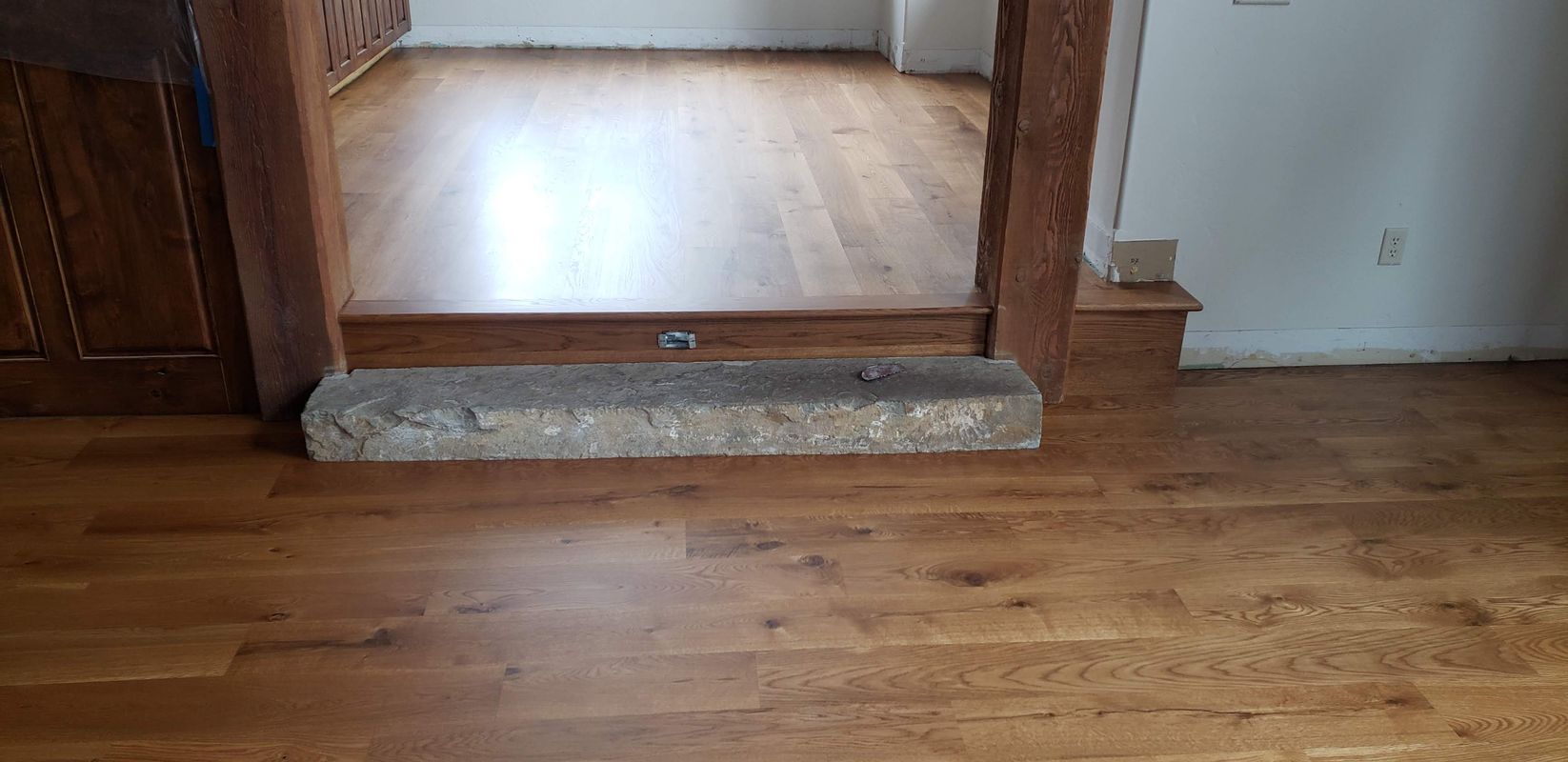
Reclaimed wood is a different conversation. We work with reclaimed material regularly, particularly in Helena’s older neighborhoods and in custom mountain homes where the character of aged wood is the whole point. Reclaimed boards have already acclimated to decades of climate exposure, which can actually work in your favor — but they require careful moisture testing and subfloor prep.
Keeping indoor humidity between 35–55% is the single best thing you can do for your floors year-round. If you heat primarily with a wood stove, a humidifier in the main living area makes a noticeable difference in how your floors look and perform through the winter.
Acclimation, Subfloors, and What Happens Before the First Board Goes Down
The prep work is where installations succeed or fail. Here’s what that looks like for a typical project.
Acclimation. Hardwood needs to adjust to the temperature and humidity of your home before it’s installed — otherwise it will continue to move after it’s down. We allow 48–72 hours of acclimation as a standard minimum, and longer during dry Montana winters when the difference between the delivery environment and your home’s interior can be significant. Rushing this step is one of the most common causes of gapping and cupping we’re called in to fix.
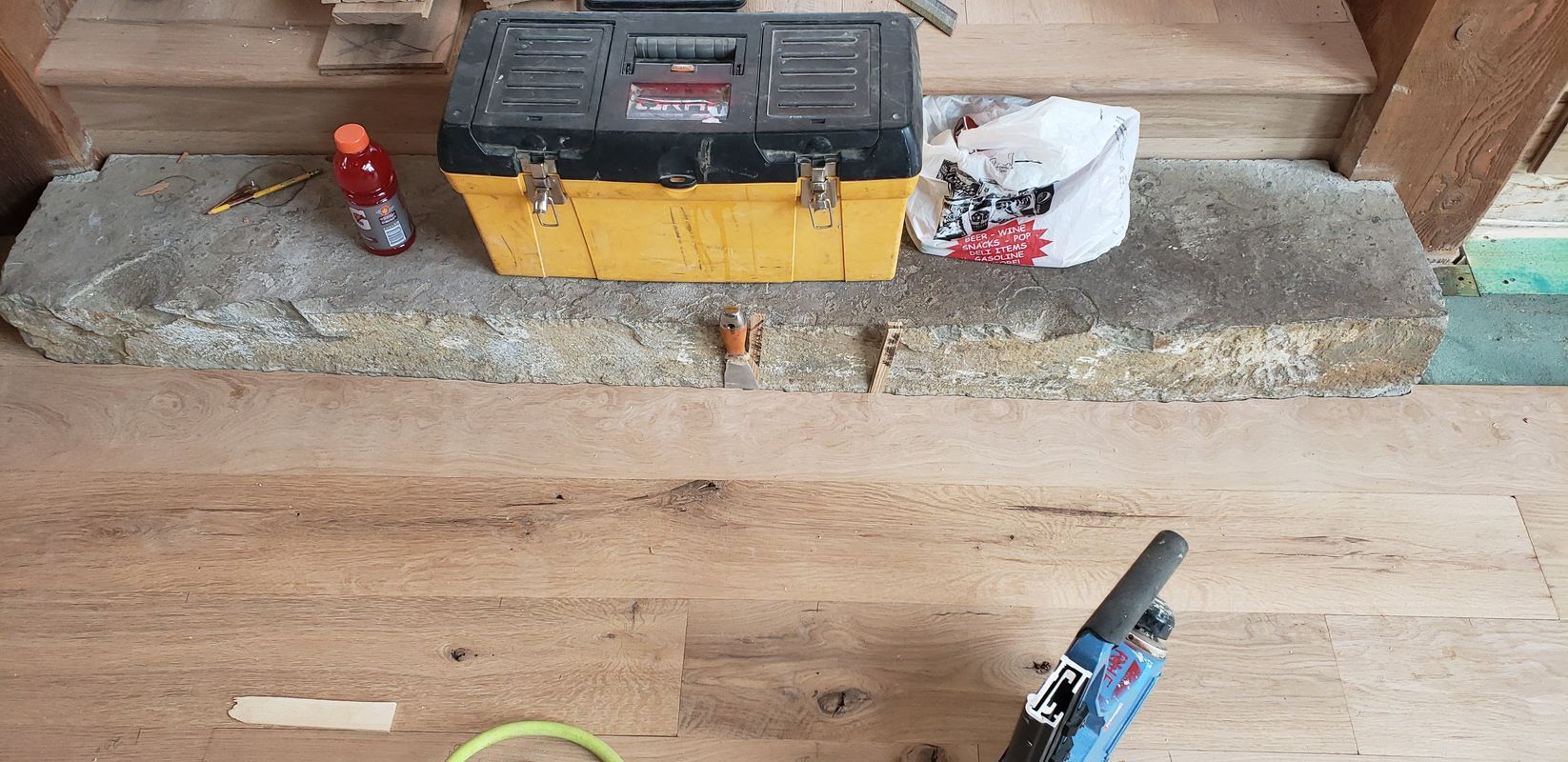
Subfloor assessment. In Helena’s older homes — particularly in the Gulch and Last Chance Gulch areas — we often find layers of history underfoot: original subfloor planks, multiple generations of vinyl, and occasionally structural surprises. We assess flatness, moisture levels, and structural integrity before any wood goes down. For concrete slabs, which are common in newer construction south of Bozeman and in slab-on-grade homes throughout the valley, we test for moisture and install an appropriate barrier or choose an engineered product rated for direct-to-slab installation.
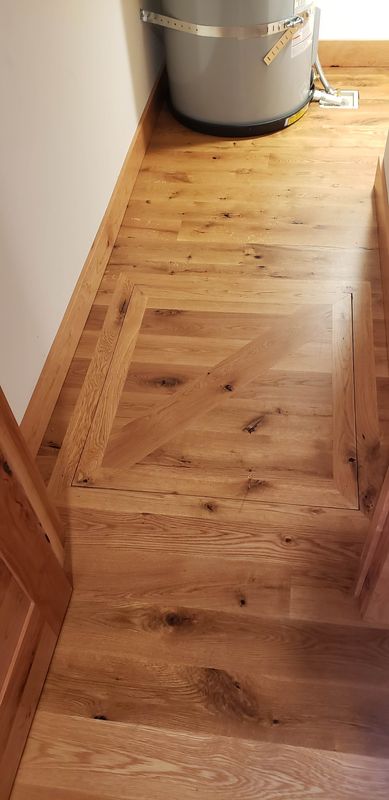
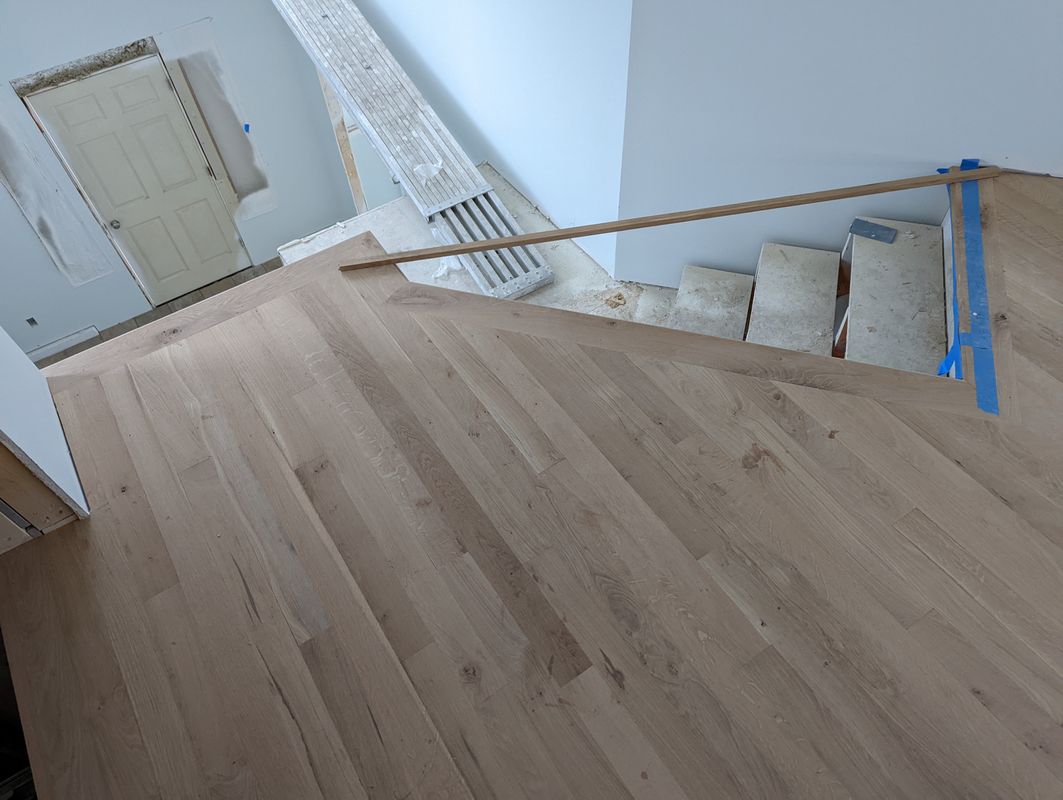
Layout planning. Before the first board is nailed, we plan the layout — accounting for doorways, transitions, focal walls, and the natural light in the room. In a herringbone or diagonal installation, a layout mistake made on day one shows up everywhere. We don’t improvise.
What to Expect: Project Timeline and Process
A straightforward installation in a single room — say, a 400–600 square foot living room on a prepared subfloor — typically runs two to three days from start to finish. Larger projects, complex patterns, or jobs that include custom transitions and stair work take longer.
Here’s the general sequence:
- On-site estimate — We look at your subfloor, discuss wood species and pattern options, and give you a specific number based on what’s actually involved.
- Material selection and acclimation — Wood is delivered and allowed to acclimate in your home before installation begins.
- Subfloor prep — Leveling, moisture barriers, and any structural work that needs to happen before the hardwood goes down.
- Installation — Boards are placed, nailed or glued, and cut to fit. Transitions are custom-milled and fitted.
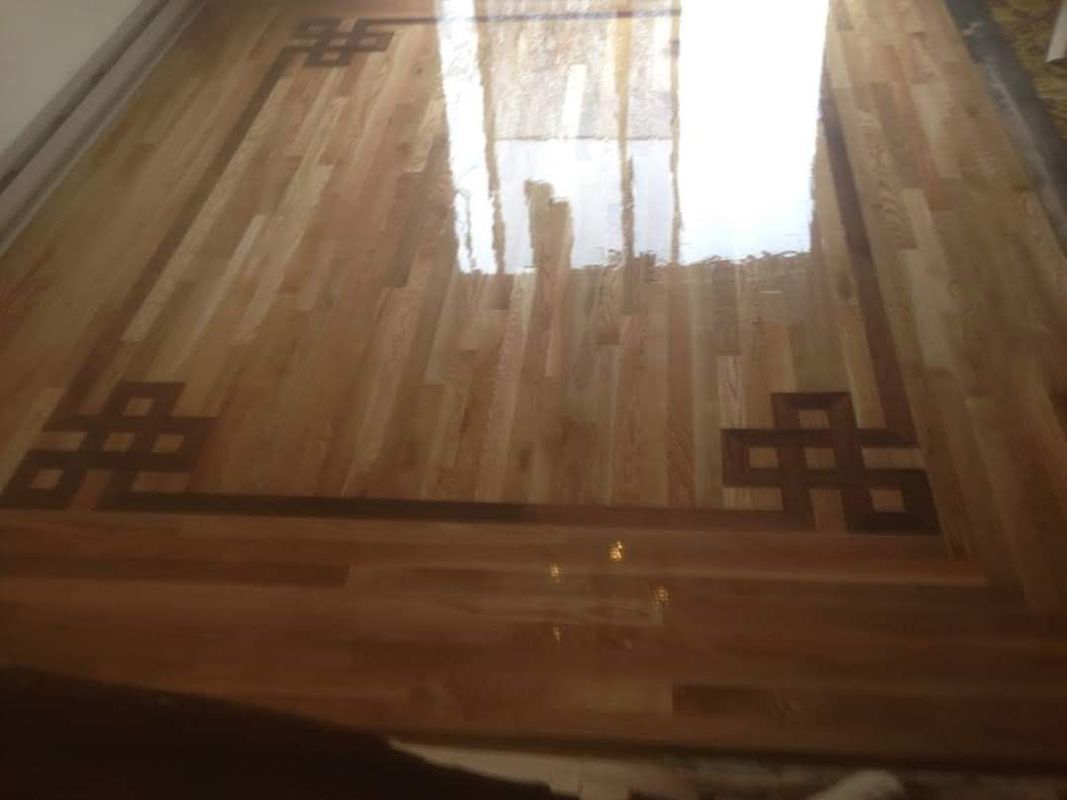
- Finishing — If the wood is site-finished rather than prefinished, sanding and finishing happen after installation. We specialize in water-based finishes: low odor, fast cure, and well-suited to Montana’s dry climate.
We serve Helena, Butte, Bozeman, Big Sky, and the surrounding communities throughout western Montana. Every project starts with a free on-site estimate.